Your City Has a Feeling. Design Put It There.
And if it doesn't have one? Also design. (Or the lack of it.)
Think about the last time you were somewhere that just got you. Maybe it was a neighborhood you wandered into on a trip and immediately wanted to live in. A plaza where people were actually sitting, actually talking, actually staying longer than they needed to. A building that made you look up.
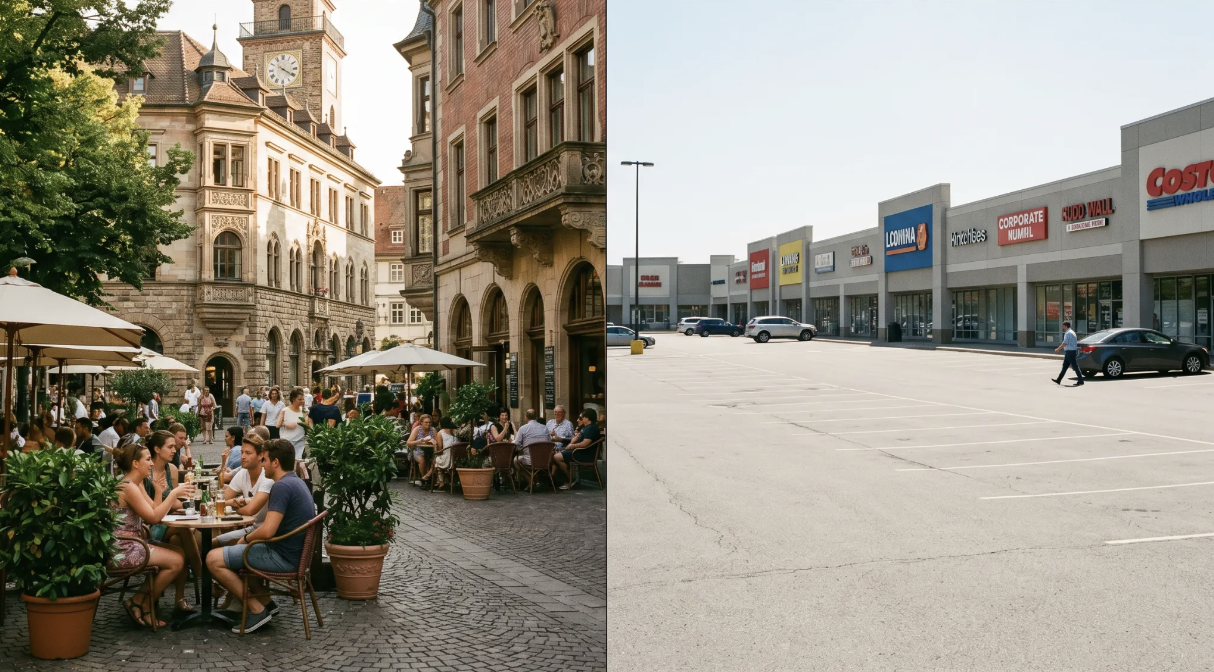
Now think about the last time you were somewhere that felt like it was designed by a committee who had never met a human being. The strip mall with no shade, no benches, no reason to linger. The "revitalized" downtown district that looks identical to every other revitalized downtown district. The lobby that has a logo wall and absolutely zero soul.
Both of those feelings — the magic and the meh — came from somewhere. They didn't happen by accident. They were designed. Or in the second case, not designed in any meaningful way.
That's the power of place. And it's more intentional than most people realize.
Place Is the Longest-Lasting Brand Decision a City Makes
Logos change. Taglines change. Marketing campaigns come and go. But the physical environment of a city — its streets, its districts, its public spaces, the way buildings talk to each other and to the people walking between them — that sticks around. For decades. Sometimes centuries.
Which means every design decision made in the built environment is also a brand decision. What does this city value? Who does it think deserves beauty? What story is it telling about itself?
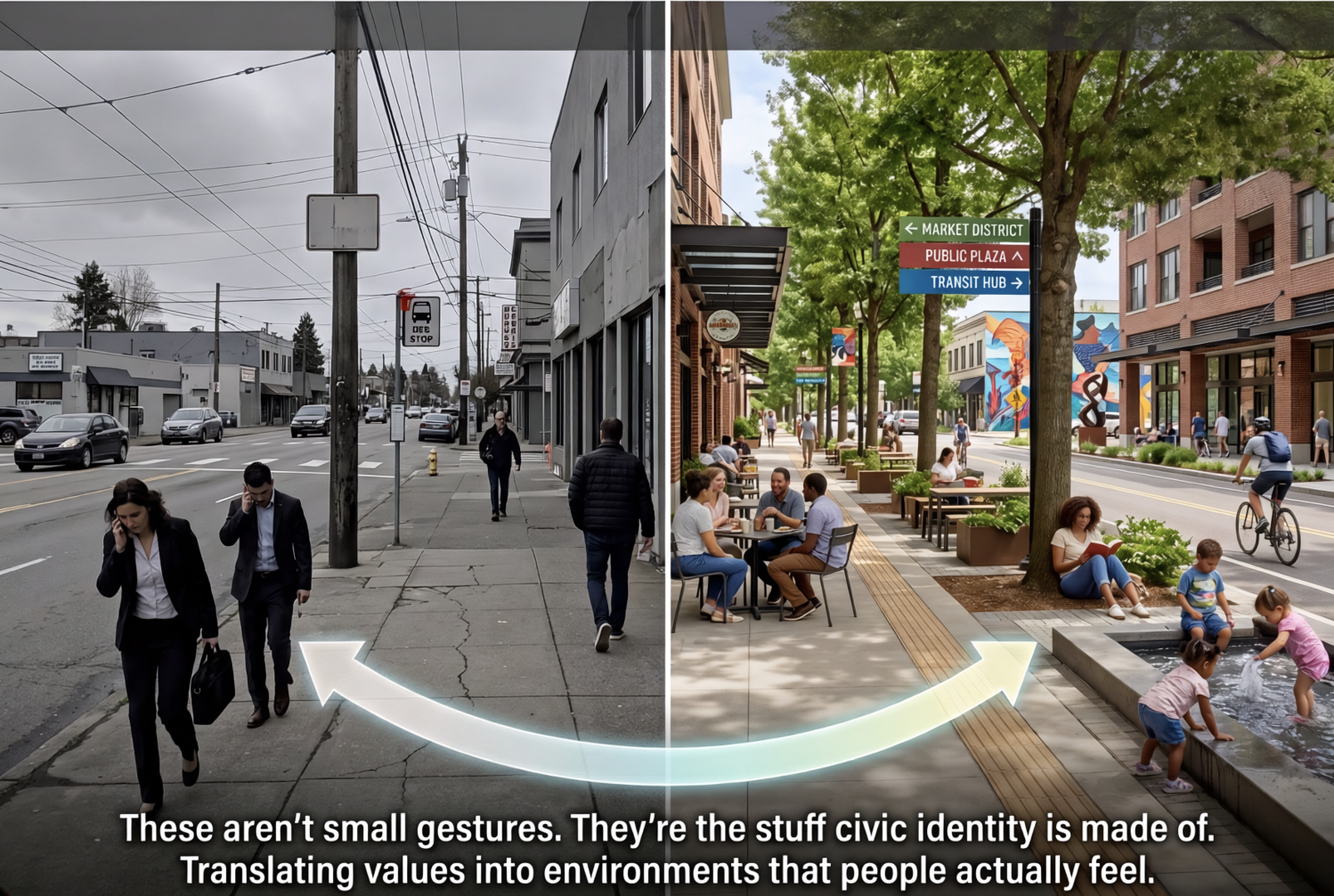
A transit system with clear, considered wayfinding design says: we think your time matters. A public plaza with seating, art, and actual shade says: we want you to stay. A mixed-use development that honors the visual language of its neighborhood instead of replacing it says: we know where we are.
These aren't small gestures. They're the stuff civic identity is made of. And they're exactly what placemaking design is built to do — translate values into environments that people actually feel.
The Block That Changes Everything
There's always a block. Every city has one — the street corner, the square, the stretch of road that became the thing the whole city rallied around. The place that got it right and then everything around it wanted to be near it.
It rarely happened because someone made the most efficient decision. It happened because someone asked a harder question: what do we want people to feel here?
That question — that single, deceptively simple question — is what separates a place from a location. A location is coordinates. A place is an experience. And experience is designed.
The texture of the pavement. The scale of the signage. The way architectural graphics wrap a corner and make a building feel like it belongs to the neighborhood rather than just sitting in it. The typography on a district marker that's beautiful enough that people photograph it. The bench placement that creates a reason to stop.
None of that is accidental. All of it is intentional. And all of it adds up to something you can't quite put your finger on but you absolutely feel — the sense that someone cared about this place.
This is what environmental graphic design does at the city scale. It's not decoration. It's brand storytelling through physical spaces — the discipline of making a place legible, meaningful, and unmistakably itself.
What Happens When No One Asks That Question
You already know the answer. You've been there.
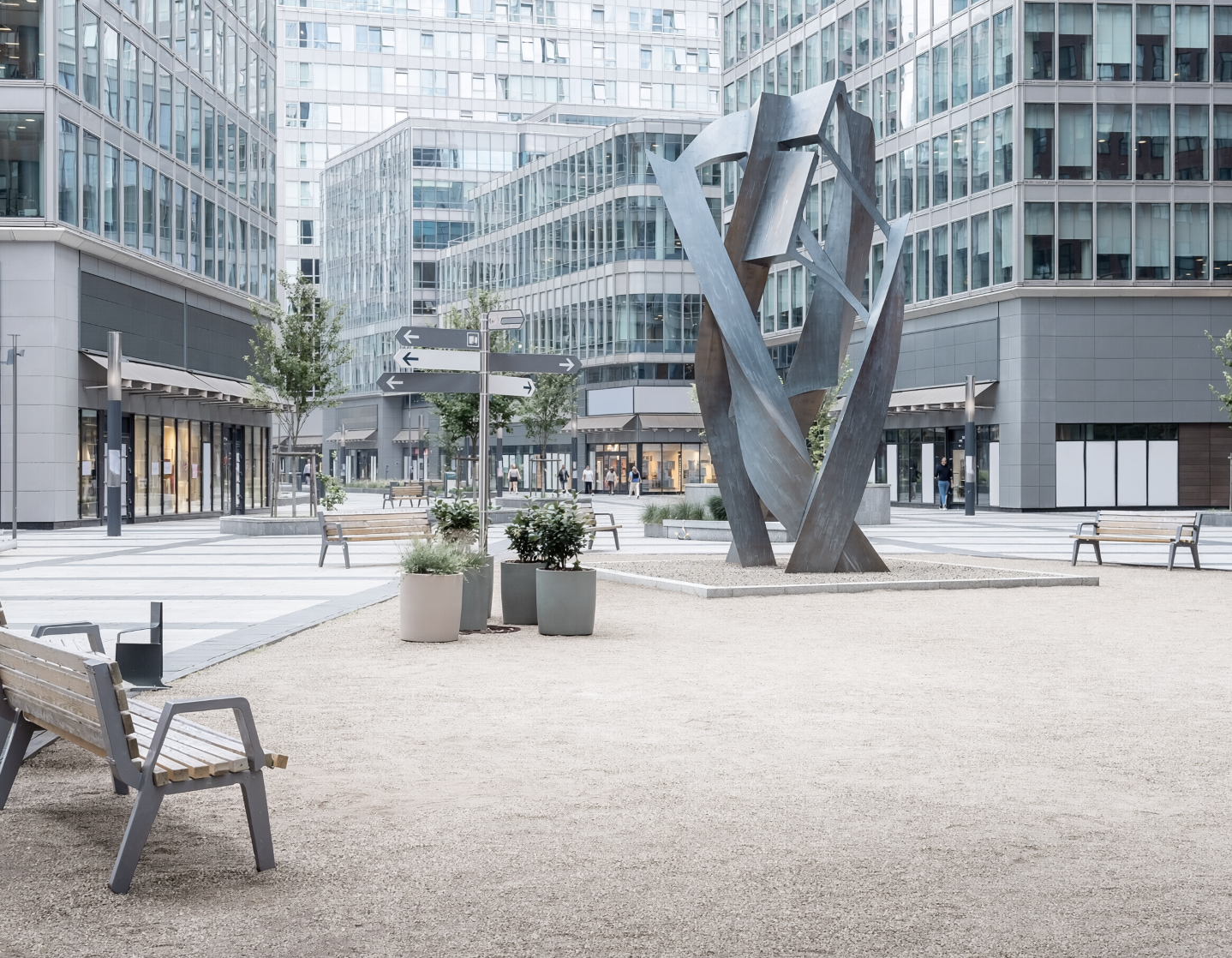
Generic streetscapes. Signage and wayfinding systems that help no one find anything. "Placemaking" that consists of one oversized abstract sculpture and some potted plants. Districts with identities so vague they could be anywhere, which means they feel like nowhere.
It's not that the architects didn't do their jobs. It's not that the developers didn't invest. It's that the experience layer — the part that translates physical space into felt meaning — got treated as an afterthought. Something to address after the real decisions were made.
And people feel that. They just usually don't have language for it. They say the neighborhood feels "generic" or "soulless" or "not really for us." What they're actually saying is: nobody designed the experience of being here.
When environmental branding is left out of the conversation, spaces function but don't resonate. They generate foot traffic without generating loyalty. They exist without ever becoming somewhere.
Design Is How Cities Talk
Every city is communicating something, constantly, through its built environment. The question isn't whether your city has a visual identity — it does. The question is whether it's intentional.
Intentional looks like a transit system that feels like civic pride, not a federal compliance checklist. It looks like a new development that adds to a neighborhood's story instead of overwriting it. It looks like public art that was chosen because it means something here, not because it was available in the budget. It looks like immersive brand experiences that make visitors feel welcomed and locals feel seen.
It also looks different depending on the context. In a corporate campus or workplace environment, branded environments improve culture and orientation — they make people feel like they belong somewhere with a real identity. In retail, environmental graphics increase engagement and drive the kind of shelf-side experience that turns browsers into buyers. In healthcare, thoughtful wayfinding design reduces anxiety and improves the patient experience in ways that go far beyond compliance. In hospitality, it's the difference between a space that's nice and a space that's memorable.
That's what great experiential graphic design does across every sector. It gives places their voice.
What This Means for Cincinnati — and Every City Trying to Get It Right
Here in Cincinnati, and across the Midwest — Columbus, Indianapolis, Chicago, Louisville, Nashville — we're watching cities make real investments in place. New mixed-use developments. Revitalized districts. Corporate campuses designed to compete for talent. Healthcare systems building facilities that feel human. Universities building campuses that communicate ambition.
The ones that are getting it right aren't just hiring great architects. They're bringing environmental graphic designers, wayfinding consultants, and experiential branding agencies into the conversation early — when the big moves are still being made and the identity of a place is still being formed.
Because the goal was never just a beautiful building. The goal was a place people want to be in, come back to, and tell other people about. A place that improves customer experience, deepens community connection, and communicates something true about the city it lives in.
That doesn't happen by accident. It happens by design.
Mertz Design Studio is a brand and environmental design studio in Cincinnati. We partner with developers, institutions, architects, and brands across the Midwest to build places people actually want to be in — through environmental graphic design, wayfinding, placemaking, and brand identity that works as hard as the buildings around it.
[Let's talk about your project →] email us now at letstalk@mertzdesignstudio.com