Building Story in Motion
A Case Study on Great Storytelling
Over the past year, Mertz Design had the opportunity to work with the Ohio Society for Human Resource Management (SHRM) State Council to create a series of five unique, character-focused animations that were to be used at their in September 2025 event. Together, we are going to walk through the many, often unthought of steps, that go into a project like this.
Step 1: The BIG IDEA
All great videos start with a great idea. Before we can even start thinking about any of the following steps, you need to first have an idea to build from!
For the Ohio SHRM animations, we worked closely with our client, who came to use with the foundations of each video. We were then able to use his vision for each video and help guide him to make something truly unique.
Step 2: Scripting
This is the part of the creative process where you get all your ideas on paper before diving too deep into the nitty-gritty of design. We worked through multiple scripting sessions to massage out the flow and cadence for each video, and to ultimately put them into a format that made sense for animation.
Step 3: Selecting a Style
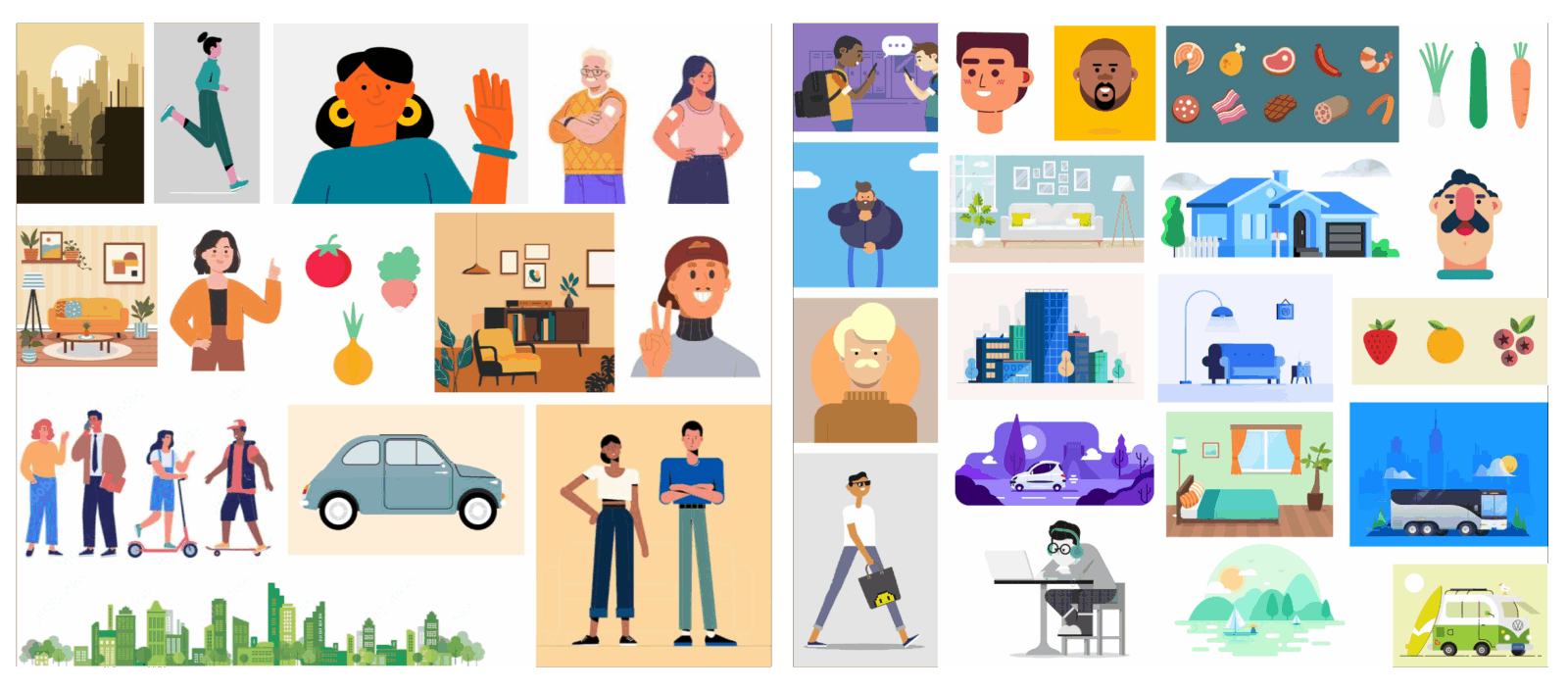
While still trying to flesh out the themes and stories for each of the videos, the team was already starting to think about look and feel. After discussing the client's vision and inspiration, we created a series of mood boards of different styles to pursue, as well as discussing the pro's and con's of each.
Step 4: Storyboarding
Now the fun begins! Once the scripts are finalized, it's time to put pen to paper (or stylus to tablet) and visualize your concepts.
For the Ohio SHRM videos, given the amount of characters and number of videos, the team decided it was best to create looser, hand drawn storyboards. These allowed us to illustrate the story's flow and plan out framing without having to develop all the assets just yet.

Step 5: Character Design
Since style had already been decided earlier in the project, we were able to dive right into character design while we worked on storyboards. The characters in these videos posed a unique challenge in the sense that they were based on real people who would be present at the actual event.
This phase really helped the team to push and understand our chosen style further, as you must balance the line of making the characters look like they fit into their world, while also being recognizable.
Step 6: Style Frames
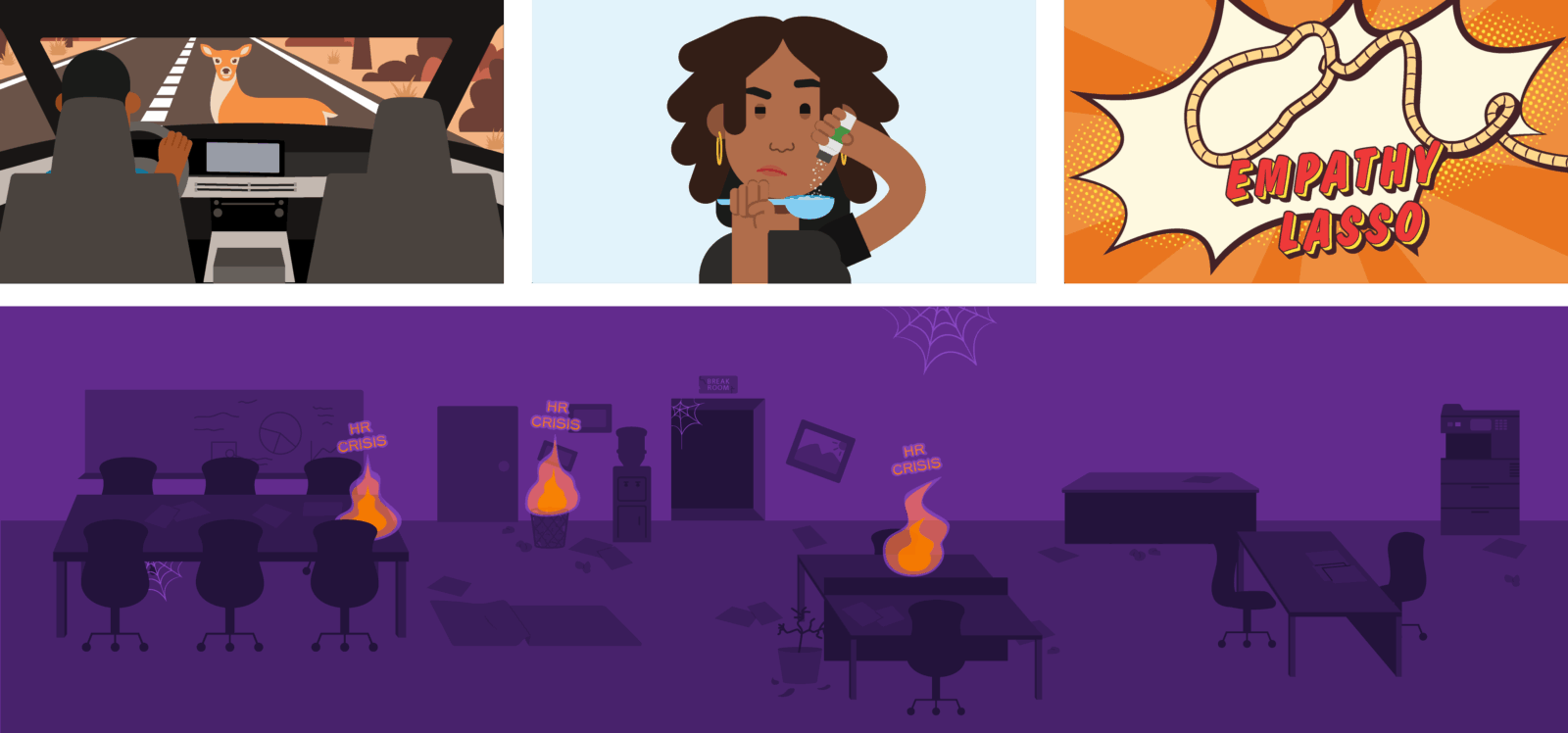
Style frames are used to give the client a visualization of what the video will look like, allowing them to give feedback and make adjustments before building all your assets.
This was another phase where we had to test and further understand the style of our videos, and you have to ask yourself a lot of questions while you go. How do my characters contrast with their environment? What are your rules and parameters for creating your backgrounds? What kind of color and textures are used? Are there methods that can be used to make asset creation faster and more efficient?
Step 7: Animatics
Once all your assets are created, it's time to make things move! …Sort of.
An important phase of a large project like the Ohio SHRM videos are animatics. Animatics can be seen as the in-between of storyboards and full-blown animation. Things don't move too much, if at all, but you are able to determine the pacing of your final video. This is where you are able to see all your scenes play back to back in real time, understand how long it takes characters to speak lines, and decide what music best suits the mood and flow of your videos.
Step 8: Animating
And now it's finally time to make things move! As a motion designer, this is definitely the phase that I find the most exciting and rewarding. Movements with each character slowly became more and more detailed and refined; going from general arm and leg movements, to hand gestures, head turns, blinking and lip syncing. This is the phase all your previous work has ultimately been leading to, and it is always exciting to see your vision come to life and move before your eyes!
Step 9: Audio Mixing
Just when you think your videos are done and ready to send off to the client, there is still post-production to take care of.
With the Ohio SHRM animations, this meant cleaning up and adjusting audio. In all five of these videos, not only did we have dialogue, but also sound effects, and multiple music tracks that had to be mixed.
Designing a logo isn’t just about making something pretty—it’s about creating a visual symbol that captures the heart of your brand. Whether you're a startup, a small business, or an established enterprise, take your time, think it through, and don’t be afraid to invest in getting it right. Because when your logo gets it right, your whole brand shines.
If you'd like to learn more about how this type of storytelling could be a part of your story, reach out to us at letstalk@mertzdesignstudio.com or check out our other case studies at www.mertzdesignstudio.com/ourwork