How to use Consumer Insights when building your brand
How to Make Use of Consumer Insights in Your Brand
Let’s talk about consumer insights—a step that’s more valuable than you might think. Honestly, it can transform your entire brand. From understanding what your audience loves (or hates) to refining your product offerings, consumer insights are the secret sauce that takes your brand from good to great. And here’s the best part: while there are plenty of companies out there that will partner with you to gather insights, you can start doing this right now, today, no matter where you are in your process. Let’s dig in!

1. The Power of A/B Testing: Real-Time Feedback
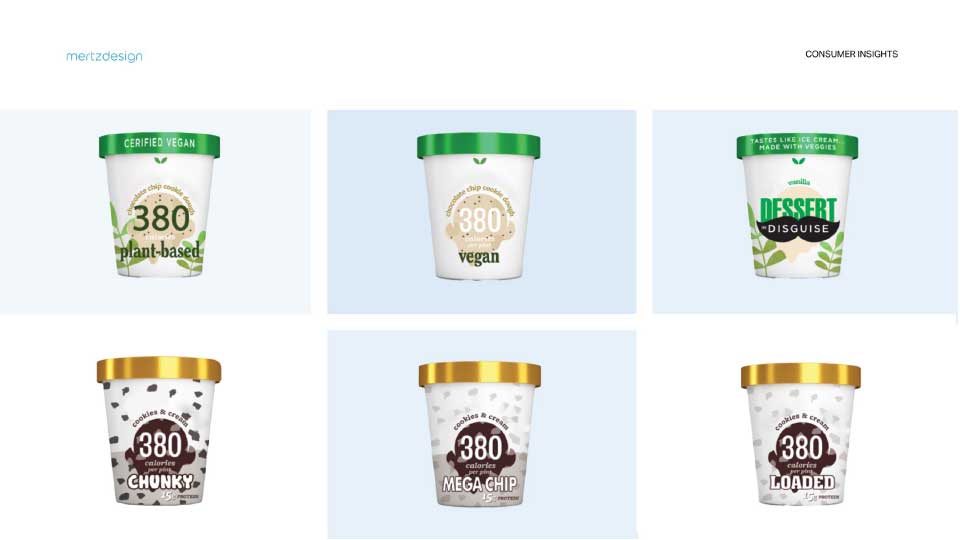
A/B testing is a simple yet powerful way to gather insights about what works best for your audience. Here’s a prime example: Mertz collaborated with an ice cream brand that needed a killer name for their new plant-based line. They wanted to find out which name would strike a chord with their audience.
Picture this: as the focus group chatted away, our design team was on the other side of a glass wall—listening in without being seen. We were able to hear their feedback and make real-time adjustments to the naming options. The facilitator would then unveil new concepts for the group to weigh in on, and we could pivot based on their instant reactions. This method allowed us to improve quickly, leading to valuable insights in real-time.
The magic of this approach? We weren’t just relying on opinions gathered days or weeks later—we could adjust and test new ideas live. If the group didn’t react well to a name, we could tweak it, try a different tone, or even introduce an entirely new concept on the spot. This kind of agility is invaluable because it lets you refine your ideas based on real, honest feedback without losing momentum.
Tip for small businesses: You don’t need a focus group behind glass walls to start gathering feedback. Try running A/B tests on social media. For example, create two different posts with slightly different messaging or visuals, and see which one gets more engagement. It’s a fast, easy, and affordable way to learn what resonates.
2. Create Surveys and Get Honest Feedback
It can be as simple as creating a survey online and sending it out to your customers or potential customers. Services like Google Forms, SurveyMonkey, or Typeform make it easy to create engaging, straightforward surveys. Ask questions that matter: “What do you love about our product?” “What could we do better?” “Which of these two logos do you prefer?”
Example: Let’s say you run a coffee shop and want to introduce a new seasonal drink. Before committing, you send out a survey to your email list asking which flavors people would be most excited about. By using their responses, you can confidently launch a drink that already has a fan base before it even hits the menu.
Tip for small businesses: Incentivize responses by offering a small discount or a freebie. People are much more likely to share their thoughts if they feel they’re getting something in return.
3. Run Pop-Up Feedback Stations or Event Booths
Sometimes the best insights come when you’re face-to-face with your audience. Setting up a booth at a farmers market or local event allows you to get real-time feedback. Trust me—people love giving their opinions, and if you ask the right questions, you’ll walk away with a goldmine of insights.
Example: A local bakery that wanted to expand its menu set up a booth at a community fair. They offered samples of new potential items and asked passersby to vote for their favorite. By the end of the day, they knew exactly which treats were crowd-pleasers and which needed tweaking.
Tip for small businesses: Use a simple voting system like “Which flavor would you choose?” with buttons or tokens. It’s quick, visual, and encourages more people to participate without feeling like they’re filling out a survey.
4. The Value of Open-Ended Questions: Keep Digging
Don’t be afraid to ask the tough questions: “Does this work? If not, why?” “What makes you loyal to this brand?” And then, just keep digging. Ask “Why?” until you get to the heart of it. The answers might surprise you. Open-ended questions can reveal insights you never thought of, showing you not just what your customers want, but why they want it.
Example: A gym owner might ask members, “What made you choose us over other gyms?” and “What’s one thing you’d like us to improve?” By getting specific answers, they can address real concerns and enhance their services to retain members and attract new ones.
Tip for small businesses: Pay attention to online reviews. Platforms like Google, Yelp, and even Instagram comments can be a treasure trove of open-ended feedback. Don’t just read the reviews—engage with them, thank them, and make improvements based on what you learn.
5. Use Consumer Insights to Refine Products, Services, and Messaging
This feedback? It’s pure gold. You can use it to refine your products, tweak your service offerings, or figure out if your messaging is actually communicating what you think it is. One of the biggest mistakes brands make is assuming they know what their audience wants. Consumer insights can help you avoid that trap by giving you concrete data to back up your decisions.
Example: A skincare brand might find out through surveys that their customers love the natural ingredients but wish the packaging was more eco-friendly. With that knowledge, they can pivot and market their products as sustainable, with eco-friendly packaging, winning over new and existing customers.
Tip for small businesses: Start small. Run a quick survey or gather feedback from loyal customers. Even if it’s just a few responses, it can be enough to give you direction and help you refine your offerings without a major overhaul.
Consumer insights can feel like a huge, daunting process, but it doesn’t have to be. Whether you’re sending out a simple survey or running a pop-up booth, every bit of feedback you gather helps. Start small, be curious, and keep digging. You’ll be amazed at how even a little insight can lead to big changes for your brand.
Want to dive deeper into understanding your customers? Start asking questions, keep listening, and remember—every answer is a piece of the puzzle.

Kristy Sieve
president