When to Refresh Your Brand—and When to Rethink It Entirely
In the life of any brand, change is inevitable. Whether it’s a subtle evolution or a bold transformation, knowing how—and when—to update your brand can make all the difference in how your audience sees you, and how you show up in the market.
But not all brand updates are created equal. Sometimes all you need is a fresh coat of paint. Other times, you need to tear it down and rebuild from the foundation up. That’s where the difference between a brand refresh and a rebrand comes in.
So how do you know which one your business needs?
Let’s break it down.
What Is a Brand Refresh?
A brand refresh is a strategic polish—not a full transformation. It’s about updating your visual identity or refining your messaging to better reflect where your brand is today, without changing the core of who you are.
I like to think of it like rearranging a room or upgrading the furniture. The layout might feel new, but the structure stays the same.
A refresh is ideal when your business is evolving, but not pivoting. You’ve grown, your audience may have shifted slightly, or you just want to stay visually relevant—but your mission and brand positioning still feel right.
One of our typical brand refresh collaborations might include:
- Logo refinement or simplification
- Updated color palette or typography
- Refreshed photography or illustration style
- Slight shifts in your messaging tone or tagline
- Modernized brand applications— think a website overhaul website or packaging innovation
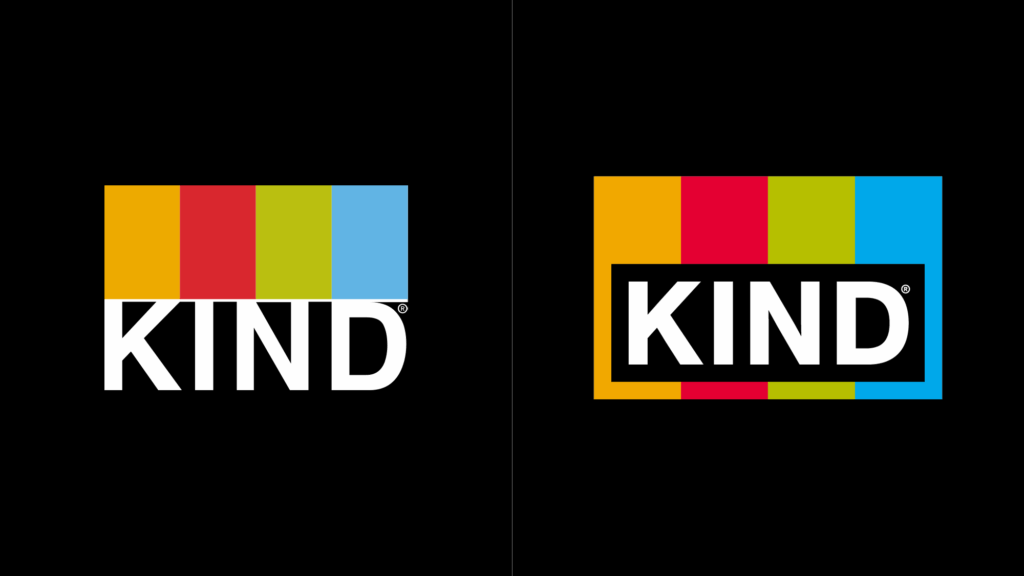
Brand Refresh in the Wild: Kind Snacks
Kind Snacks undertook a brand refresh to modernize its visual identity while maintaining its core values. Here’s how they tackled it:
- Logo Update: The refreshed logo retains the brand's signature colorful stripes (the most iconic part of their brand) but with a more contemporary and streamlined design that’s optimized for a huge variety of applications.
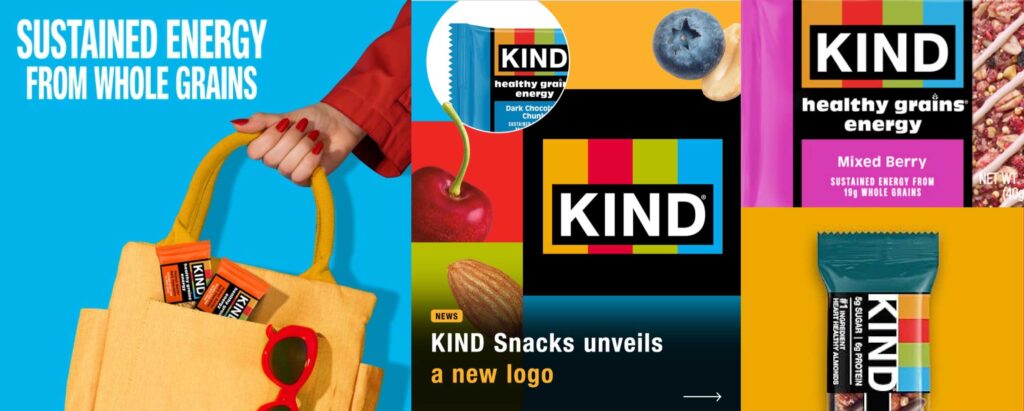
- Packaging Redesign: Packaging was updated to enhance shelf appeal and clarity. With a bold new look, larger logo, and unwrapped product on front of pack, they’re emphasizing the brand's commitment to deliciously healthy snacks and transparent ingredients, while standing out on a crowded shelf.
- Strategic Positioning: By updating its visual elements, Kind Snacks seeks to reinforce its position in the competitive healthy snack market by innovating—like with new fruit-forward flavors or by piloting curbside recyclable wrappers—appealing to both existing and new customers.
What Is a Rebrand?
A rebrand is a much deeper change. It’s a full on rethinking of how your brand looks, sounds, and operates. This often includes a new brand strategy, voice, messaging, and visual identity—and sometimes even a new name.
It’s more than a visual update. It’s a total repositioning.
You might consider a rebrand when:
- Your business has changed direction or added new services
- You’ve outgrown your original name or brand positioning
- Your current brand no longer resonates with your audience
- You’ve undergone a merger or acquisition
- You’re trying to distance from past perceptions or reputation
Rebrands are bold and transformative. They require research, strategy, and internal alignment—but when done right, they can unlock major growth and clarity.
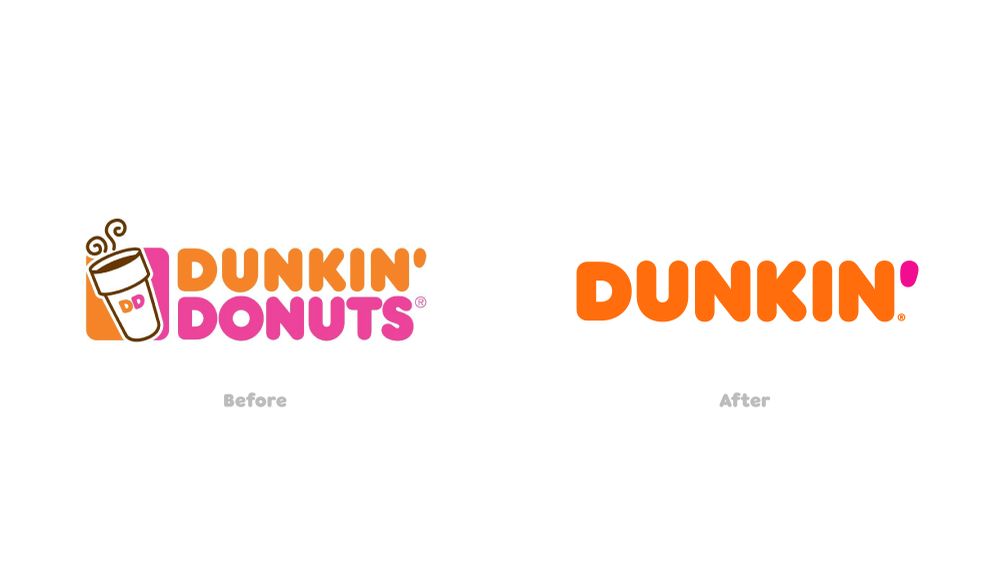
Rebrand in the Wild: Dunkin'
In 2018, Dunkin' Donuts announced a significant rebranding initiative, officially shortening its name to "Dunkin'" effective January 2019. This move was part of a broader strategy to modernize the brand and emphasize its beverage offerings. Let’s see how they pulled it off:
- Name Simplification: Dropping "Donuts" from the name reflects the company's renewed focus on beverages, particularly coffee, which accounts for a substantial portion of its sales. They were even able to retain their iconic slogan, “America Runs on Dunkin’”.
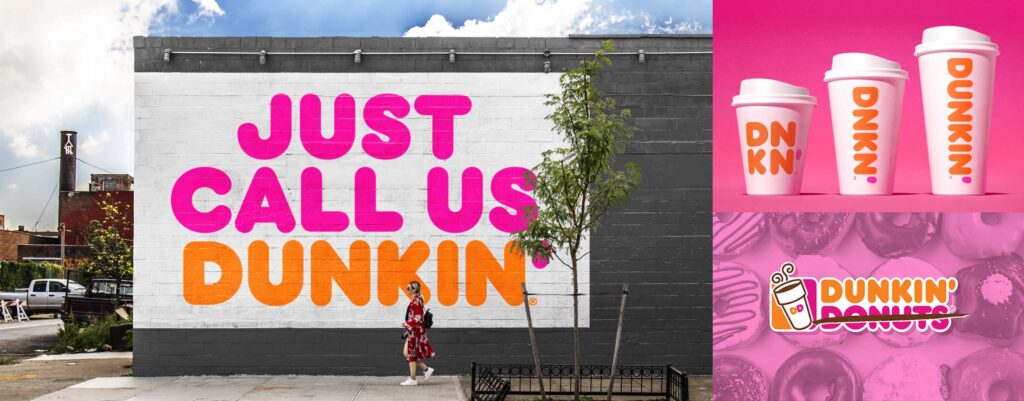
- Visual Identity: With updated packaging designs, advertising, website & social, the rebrand retained the iconic pink and orange color scheme and the familiar font introduced in 1973, preserving brand recognition during the transition while laying the foundation to modernize the Dunkin’ brand and keep it relevant for generations to come.
- Brand Positioning: By redesigning their stores to enhance the customer experience and by launching marketing campaigns that emphasize the brand’s commitment to speed, convenience, and quality, they were able to position Dunkin' as a modern, on-the-go, beverage-led brand, catering to changing consumer preferences and competitive pressures in a landscape increasingly dominated by coffee culture.
Not Sure Which One You Need? Start by asking yourself:
- Has our mission changed?
- Are we attracting the wrong audience—or no audience at all?
- Does our brand reflect where we are today (and where we’re going)?
- Are we being mistaken for competitors?
- Do we feel outdated, inconsistent, or disjointed?
If your answers lean toward evolution, you might just need a refresh. If they point toward transformation, it may be time to rebrand.
The Cost of Standing Still
The one thing you don’t want to do? Nothing.
Branding isn’t just about looking good—it’s about creating alignment between who you are, how you want to be perceived, and what your audience actually experiences. A brand that no longer fits can lead to confusion, missed opportunities, or a lack of connection with the people you’re trying to reach.
Whether it’s a refresh or a rebrand, the right move is the one that helps your business grow with purpose.
Ready to Evolve Your Brand?
We help businesses uncover what’s working, what’s holding them back, and what kind of brand evolution will help them move forward. If you’re not sure where to start, I’d love to talk.

Maddie Schneider
art director