Design ROI Is Real: How Experience-Driven Brands Turn Design Into Growth
Design ROI doesn’t always announce itself with a dashboard or a quarterly report.
More often, it shows up quietly — in trust earned, habits formed, and loyalty sustained over time. The clearest proof lives in the brands that feel effortless to engage with, no matter where or how you encounter them.
When design is embedded into experience, it becomes a driver of behavior — not just perception.
Take Coca-Cola. For more than a century, the brand has relied on the same core visual signals — red, script typography, and emotionally charged storytelling centered on togetherness. From packaging to global campaigns, nothing feels accidental. Customers don’t need to re-learn the brand every time they see it. That consistency builds familiarity, and familiarity builds trust. Trust, in turn, lowers the barrier to purchase and reinforces long-term loyalty.
McDonald’s operates with similar precision. The golden arches, warm color palette, uniform menu systems, and predictable layouts create comfort at scale. Whether you’re in Ohio or overseas, the experience feels familiar. That predictability is intentional — and incredibly valuable. The brand’s design consistency removes uncertainty, making the decision to return almost automatic.
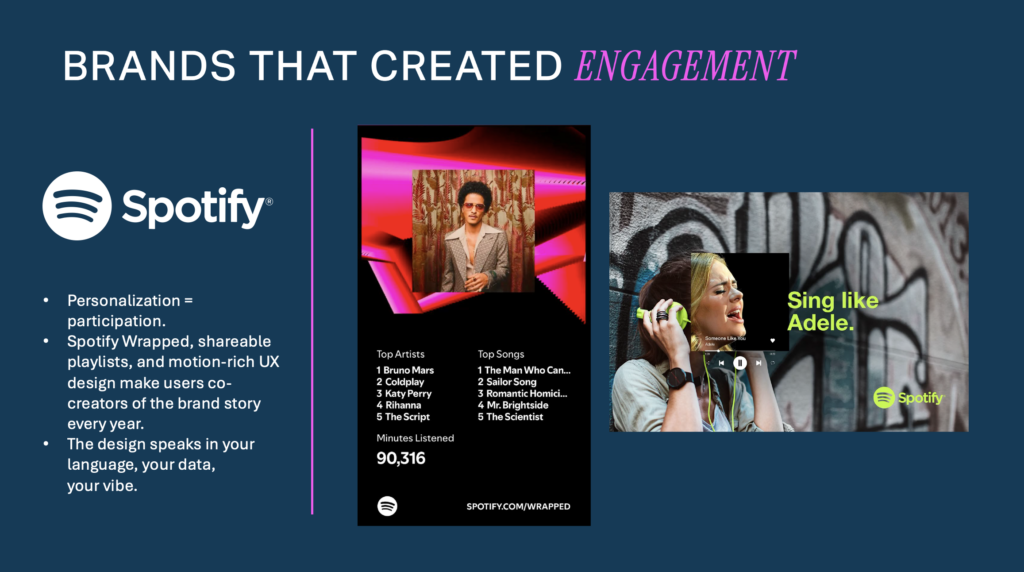
Other brands demonstrate ROI through participation. Spotify’s design approach turns personalization into engagement. Features like Wrapped transform user data into shareable storytelling, inviting customers to actively participate in the brand narrative. Design becomes social currency. Awareness spreads organically. Loyalty deepens — not because of discounts, but because users feel seen.
DESIGN SYSTEMS
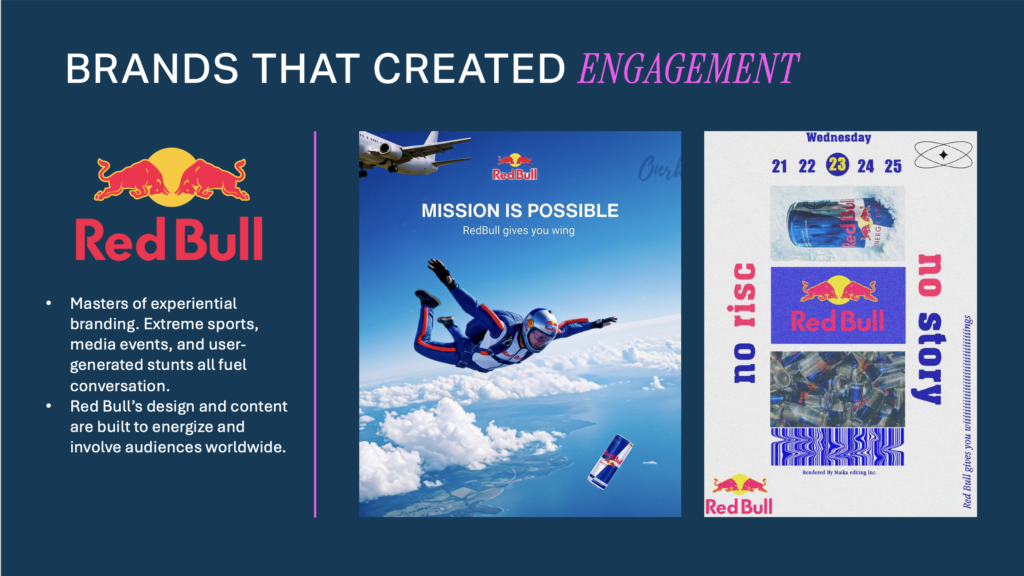
Red Bull takes experience even further. The brand’s design extends well beyond packaging into motion, events, extreme sports, and content ecosystems. Every touchpoint is engineered to energize and involve audiences. Red Bull doesn’t rely on traditional advertising alone; it designs experiences people want to be part of. That immersion creates emotional connection competitors can’t easily replicate.
RED BULL
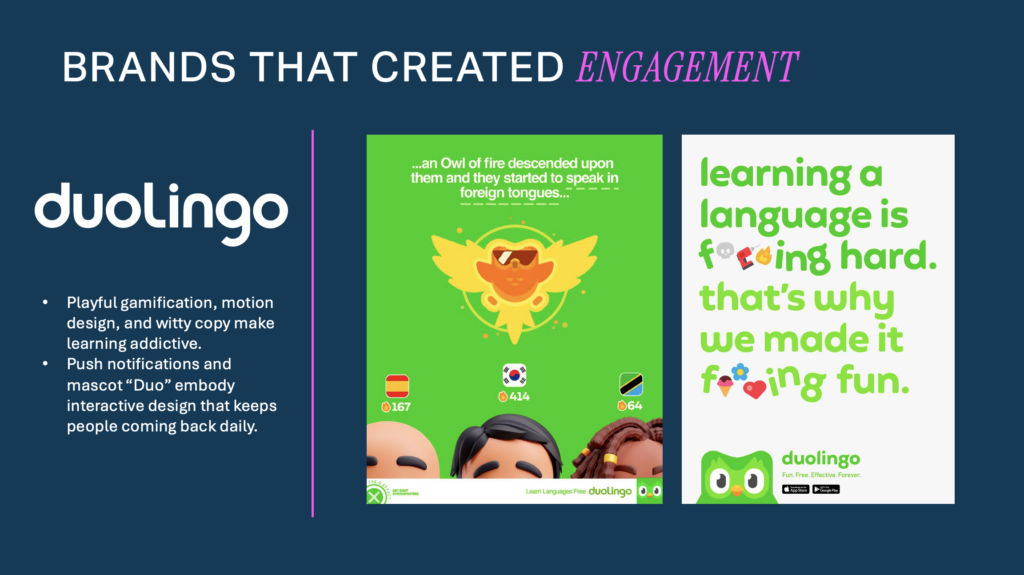
Even platforms like Duolingo prove how design fuels retention. Through playful motion, gamification, and a consistent brand voice embodied by its mascot, the app transforms learning into a habit. Design isn’t just aesthetic — it actively shapes user behavior.
DUOLINGO
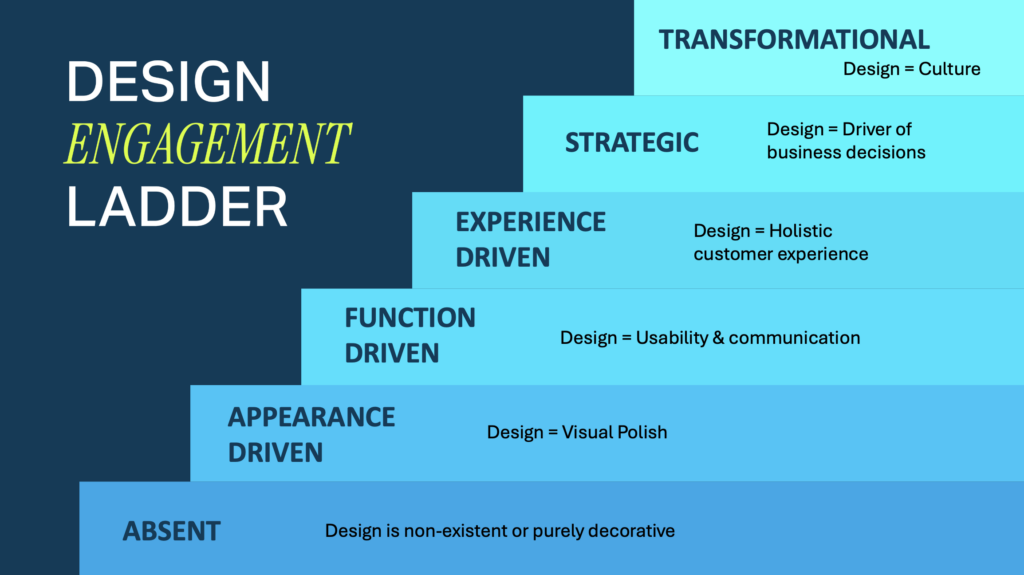
What unites these examples is design maturity. Design is not decoration. It’s not reactive. It’s strategic, experience-driven, and embedded early. That’s where ROI shows up most clearly:
-
More yes — ideas gain approval because they’re clear and compelling
-
Faster yes — design reduces friction and accelerates understanding
-
Keep them longer — emotional connection turns customers into loyalists
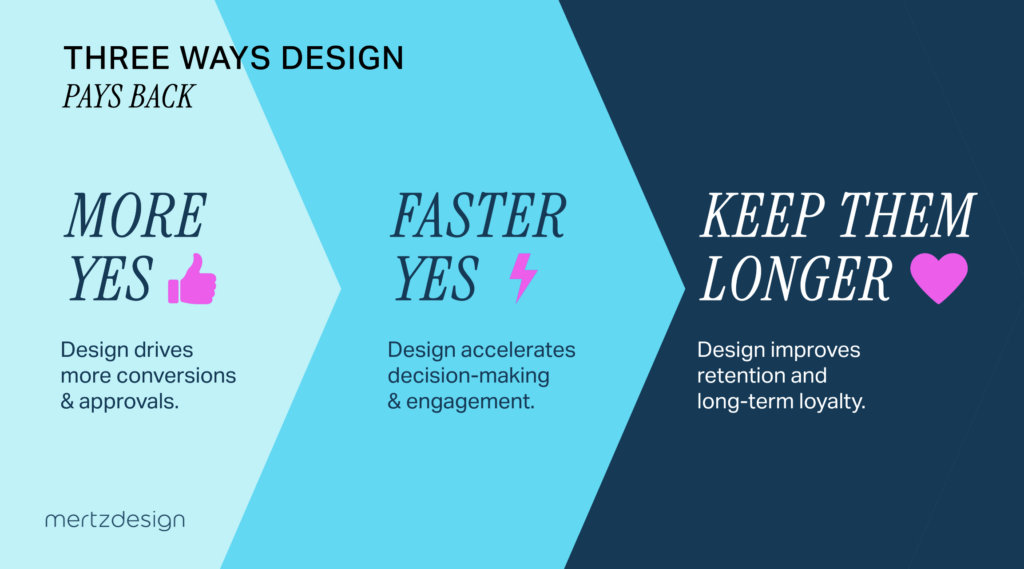
You may not always measure design ROI in dollars immediately, but you’ll recognize it in momentum, confidence, and consistency. And over time, those signals compound.
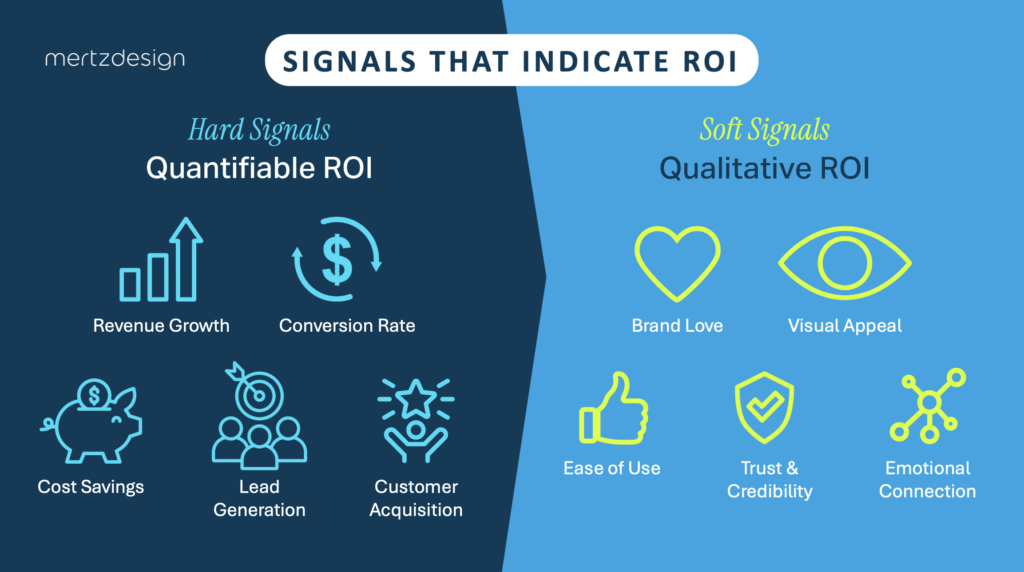
If you want to understand where your brand sits on the design maturity spectrum — and how experience-driven design could unlock growth — start with a brand or experience audit. It’s the fastest way to identify gaps, clarify opportunities, and turn design into a true business driver.
Visit our website at www.mertzdesignstudio.com or email us at letstalk@mertzdesignstudio.com to learn more!

Kristy Sieve
president